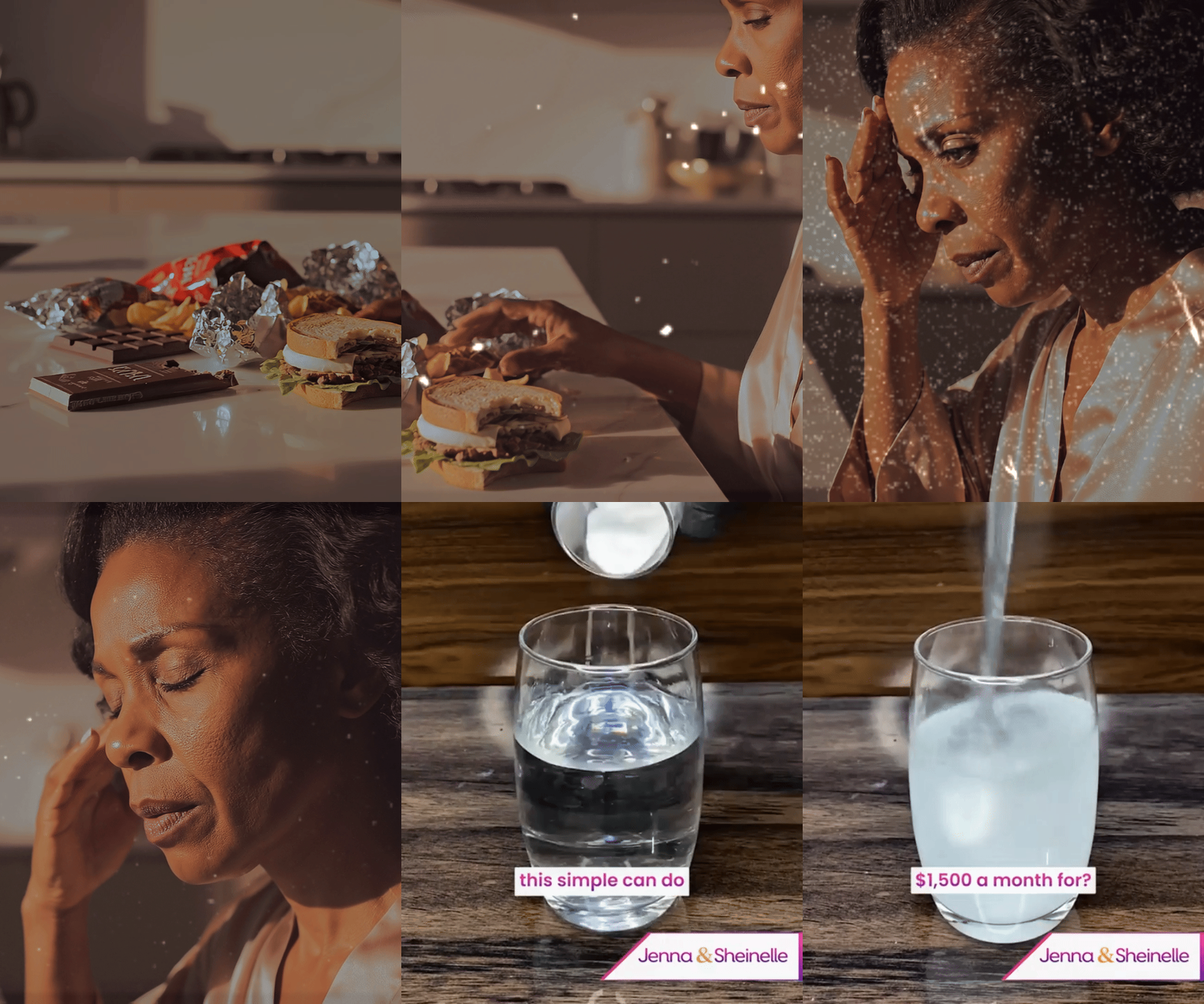
How to Quiet Food Noise and Curb the Sugar Cravings That Intensify After 40 — and the Quiet Morning Routine Wellness Experts Are Now Exploring
The mental exhaustion many women experience around food after 40 runs deeper than willpower. Researchers say it is something else entirely — and a growing number of wellness experts are now exploring a simple morning routine that may help quiet the constant thoughts about food and curb the urge to reach for something sweet. The full reasoning is detailed in the short feature below (see the feature).
It often begins quietly. Somewhere after forty, the relationship with food starts to change in ways that feel difficult to explain — even to yourself. You're not physically hungry, but the thought of something sweet lingers. You finish a meal and within an hour you're already thinking about the next one. The constant negotiation — should I eat this, should I not, why do I want it, why can't I stop thinking about it — becomes a kind of mental background noise that never fully turns off.
It's not a lack of willpower. It's not emotional weakness. And it's not something most diet plans even acknowledge. Women increasingly describe it as food noise — the persistent, mentally draining preoccupation with food that goes far beyond normal hunger. By midlife, for many women, food thoughts become louder, more intrusive, and quietly exhausting in a way that erodes confidence and steals mental energy from everything else.
What most conversations about nutrition still miss — and what a growing number of wellness experts are now beginning to explore — is that this experience has a real, physiological basis. And understanding it may be the first step toward something that actually helps. A growing number of wellness experts are now beginning to explore why this happens — and what may help (see the short feature).
It's Not Just Hunger.
For many women, what changes after 40 isn't just appetite — it's the mental weight of food. The constant planning, the negotiations, the guilt after giving in, the frustration of feeling controlled by something you used to manage effortlessly. It becomes a loop that plays in the background of your entire day.
The hormonal shifts that begin in the late thirties and quietly accelerate through perimenopause affect more than most women realize — not just metabolism, but the brain's relationship with cravings, sugar, and the feeling of satisfaction after eating. The signals that once told you "enough" become quieter. The ones that say "more" become harder to ignore.
For many women over 40, the experience is less about hunger and more about the mental exhaustion of constantly thinking about food — even when you don't want to.
The most common thing women tell me is: "I don't understand why I can't stop thinking about food." That's not a willpower problem. It's something much deeper — and much more common than most women realize.
— A recurring observation in current women's wellness discussions
The result is what many women describe as emotional exhaustion around food — a quiet, persistent erosion of confidence, self-image, and daily peace of mind. And it does not stay just in the mind. Over time, this mental noise quietly shapes the body too — the weight that does not respond to effort, the bloating, the slow climb on the scale despite every reasonable choice. Not dramatic enough to feel like a crisis. Just constant enough to make you wonder what happened.
The reasoning that has caught researchers' attention — and what some women are now doing differently in the morning — is detailed in the editorial feature (see the feature).
The mental exhaustion of constant food thoughts is not the kind of thing that quiets down on its own. The morning routine being discussed in this feature is shorter than brushing your teeth — and the rationale behind it is what makes the briefing worth watching now.
The editorial feature below explores why this happens — and the quiet morning routine women in wellness communities are now discussing.
What You Probably Weren't Told — And Why That's Changing Now
Most conventional plans for managing cravings focus on surface-level strategies — portion control, calorie counting, willpower-based frameworks. For many women, these tools have never addressed the real issue: the persistent mental presence of food, the emotional loop that no meal plan has ever quieted.
A growing number of women are exploring a simple morning routine — using everyday ingredients in a specific combination — as part of their approach to calmer appetite patterns.
That's why the current conversation in women's wellness has shifted. Rather than focusing on what to eat less of, a growing number of women are exploring a different question: how to support the body's own ability to regulate appetite and quiet the noise — naturally, gently, and sustainably — as walked through in the short feature itself (see the feature).
What's Being Explored
"What's interesting isn't any single ingredient — it's the way certain everyday compounds, when combined in a particular way and taken at a specific time of day, seem to support the appetite-signaling patterns that shift during midlife."
— Drawn from current discussions in women's wellness communities
The focus isn't on a quick fix. It's on a simple morning routine — using ingredients being discussed in appetite-regulation wellness circles — that may help support what the body is already trying to do, particularly during the years when those systems are quietly recalibrating.
The full routine — what is involved, the precise timing, and what realistic expectations look like — is walked through step by step in the short feature. It is shorter than brushing your teeth, and the reasoning behind it is what makes it worth watching now. See the morning routine here →
What Women Are Saying About the Shift
Many of these accounts came from women who recognized the same patterns of food noise in each other — and found comfort in knowing they weren't alone.
The shift women describe most often is not dramatic — it is the quiet relief of watching food thoughts and sugar cravings finally settle, and the slow return of a body that responds to effort again.
"The constant thinking about snacks just... softened. I didn't realize how much mental energy it was consuming until it started to quiet down. I still eat — I still enjoy food. But the noise between meals is so much calmer. That shift alone changed my day. What she described is shorter than my morning coffee. By the second week, the noise had quieted."
Lisa T., 45
Austin, TX
"Sugar cravings were the thing I couldn't talk about without feeling embarrassed. They were relentless — every afternoon, every evening. After a few weeks with this routine, they finally felt quieter. Not gone entirely, but manageable in a way they hadn't been for years. I was the most skeptical person in my house. By the end of the first month, I stopped reaching for sweets at night without thinking about it."
Jessica G., 42
Phoenix, AZ
"Food stopped dominating my thoughts. That's the simplest way I can describe it. I used to plan every meal anxiously, negotiate with myself about every snack. Now I eat when I'm hungry and the rest of the time my mind is genuinely elsewhere. I feel more like myself again. I wish someone had told me ten years ago that the problem was not my willpower. The routine takes two minutes. The mental quiet is what surprised me most."
Karen M., 51
Portland, OR
Individual experiences vary. The accounts above are shared for context and are not representative of typical results.
What the Editorial Feature Explores
The full short feature walks through why food thoughts and sugar cravings shift after 40, the quiet morning routine that women in wellness circles are exploring, and how it actually fits into daily life — without rigid plans or restrictive diets.
It also addresses a question most plans never touch honestly: what daily habits can and cannot do — and why understanding what is actually happening inside your body is often the most important first step.
For any woman who has felt the quiet frustration of food thoughts and cravings growing louder year after year, this short feature offers something different — not another restrictive plan, but a calm, well-researched starting point. Watch the 12-minute feature here →
Common Questions
Why do sugar cravings intensify after 40?
Hormonal shifts during the perimenopausal transition — including changes in estrogen, progesterone, and serotonin availability — can alter the way the brain responds to sugar and the signals that regulate appetite. The editorial feature explains the current understanding in detail. The full reasoning is walked through in the short feature.
What is food noise, and is it real?
Food noise is the term increasingly used to describe persistent, intrusive thoughts about food — thinking about meals and snacks even when not physically hungry. It is recognized in current wellness and clinical discussions as a genuine neurological and hormonal pattern, not simply a matter of willpower.
Does this routine replace medical advice?
No. The morning routine is presented as a daily-habit approach being explored alongside — never in place of — guidance from a qualified healthcare professional. Any concerns about appetite, hormones, or cravings should be discussed with a doctor.
How long before food thoughts may begin to shift?
Reports vary. Many women describe noticing changes in appetite patterns and the intensity of food noise within several weeks of consistent practice. The feature covers what realistic timelines look like. What makes the current conversation different — and why some women are responding when nothing else worked — is detailed in the short feature (see it here).
The full editorial feature is available below — exploring why food noise intensifies after 40, the morning routine women are discussing, and what the experience of calmer appetite patterns actually looks like.